
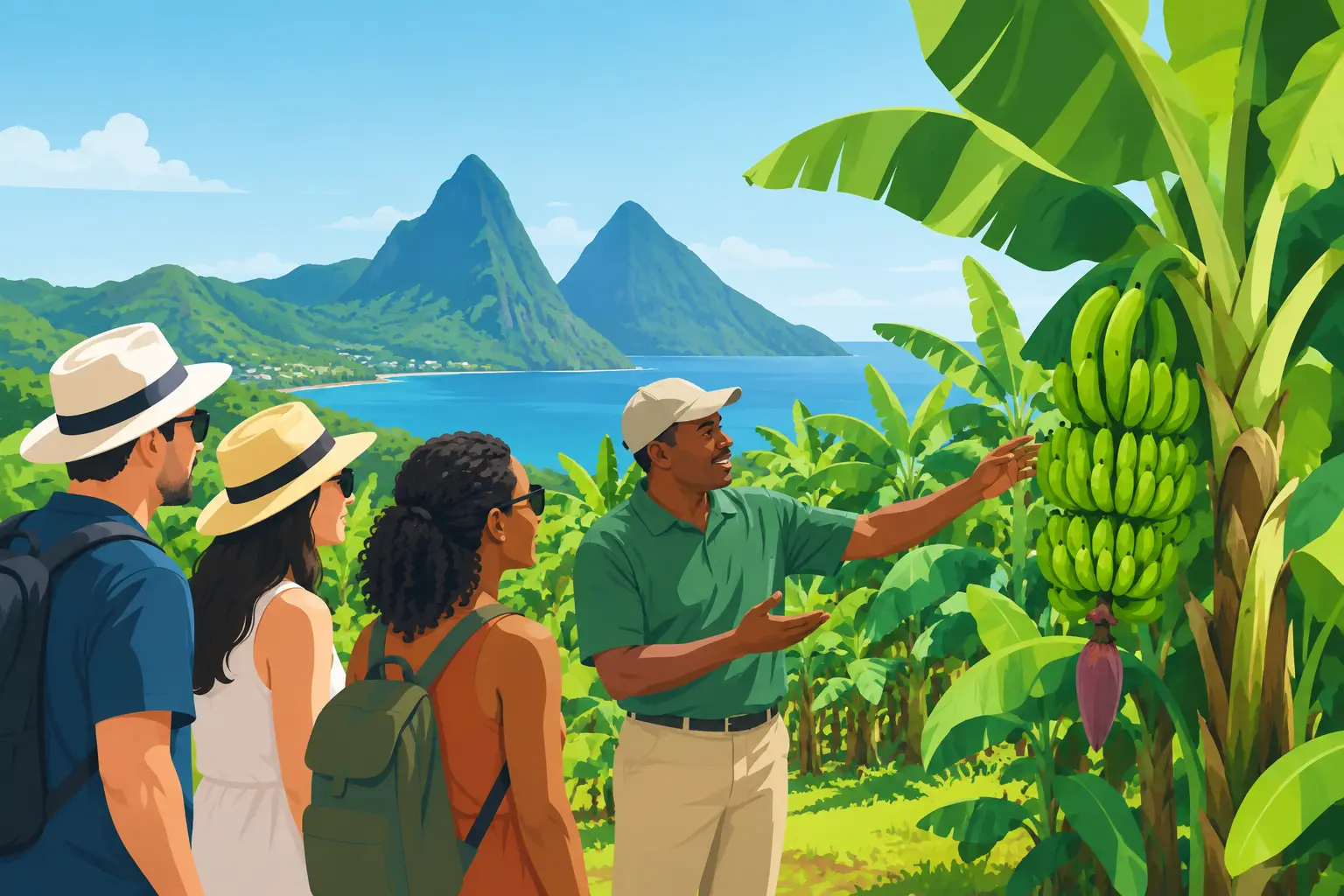
A banana plantation tour in Saint Lucia is not a theme-park stop with rows of fruit arranged for photos. It is a look at one of the island’s working agricultural landscapes, where steep green hills, tropical rain, and generations of local farming knowledge all play a part in getting bananas from the field to market. For many visitors, it becomes one of the most memorable stops on the road to Soufrière – especially when a local guide explains what you are actually seeing.
Bananas are woven into Saint Lucia’s rural scenery. You may spot plants growing beside the road, on hillsides, and in valleys as you travel through communities outside Castries and toward the island’s west coast. A well-planned visit adds context to that scenery without taking over your entire day, leaving time for the Pitons, waterfalls, beaches, or a mud bath experience.
What Happens on a Banana Plantation Tour in Saint Lucia
Most banana plantation visits are a short, guided stop within a larger island tour rather than a standalone all-day activity. Your driver-guide will usually bring you to a working growing area or a viewpoint near the plantation, then explain how bananas are planted, protected, harvested, and prepared for export or local use.
The first surprise for many guests is that banana plants are not trees. They are large flowering herbs with thick, layered stalks. A bunch of bananas grows from a hanging flower stem, and the fruit is often covered with a protective blue bag while it develops. Those bags help shield the bananas from insects, weather, and damage as they mature.
Your guide may point out the difference between bananas grown for export and varieties used locally in Saint Lucian kitchens. Green bananas are a familiar part of island meals and can be boiled, fried, or served with fish, saltfish, vegetables, and sauces. Ripe bananas are enjoyed as a snack, but local cooking also makes use of plantains and other ground provisions grown nearby.
The experience is best when it feels connected to the road trip around the island. You are not just looking at a crop. You are seeing why so much of Saint Lucia’s interior is lush, how rural communities have earned a living from the land, and why the island’s winding roads pass through such dramatic green scenery.
Why Bananas Matter to Saint Lucia
For decades, bananas were one of Saint Lucia’s most significant agricultural exports. The industry supported many farming families and shaped communities across the island. International markets, trade rules, hurricanes, crop disease, and changing costs have all affected production over time, but bananas remain an important part of Saint Lucia’s identity and daily life.
That history gives a plantation stop more meaning than a quick photo opportunity. Farming on a mountainous island is demanding work. Fields may sit on sloped land, rain can change conditions quickly, and harvesting requires careful handling so the fruit arrives in good condition.
A local guide can also explain details you might miss from the vehicle: the irrigation channels, the blue protective sleeves, the way bunches are supported, and the mix of food crops growing around the bananas. On some routes, you may also see cocoa, coconut, breadfruit, mango, or other tropical plants depending on the season and location.
The Best Way to Include a Plantation Stop in Your Day
A banana plantation stop fits naturally into a sightseeing trip that travels south toward Soufrière. The drive itself is part of the experience, with coastal views, fishing villages, hillside communities, and scenic overlooks along the way. Rather than booking transportation only and hoping to find stops on your own, choose a guided itinerary that allows time for the places you most want to see.
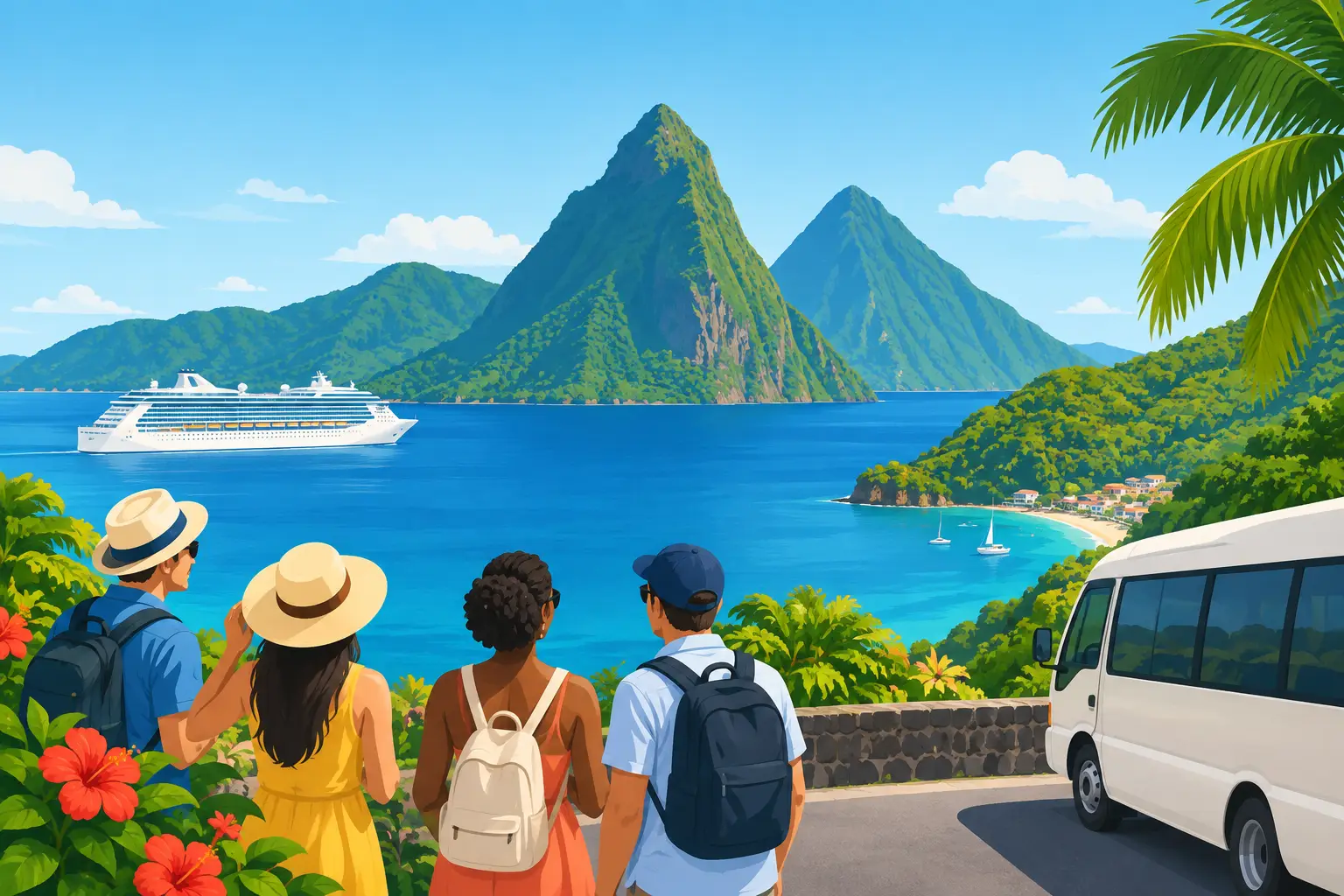
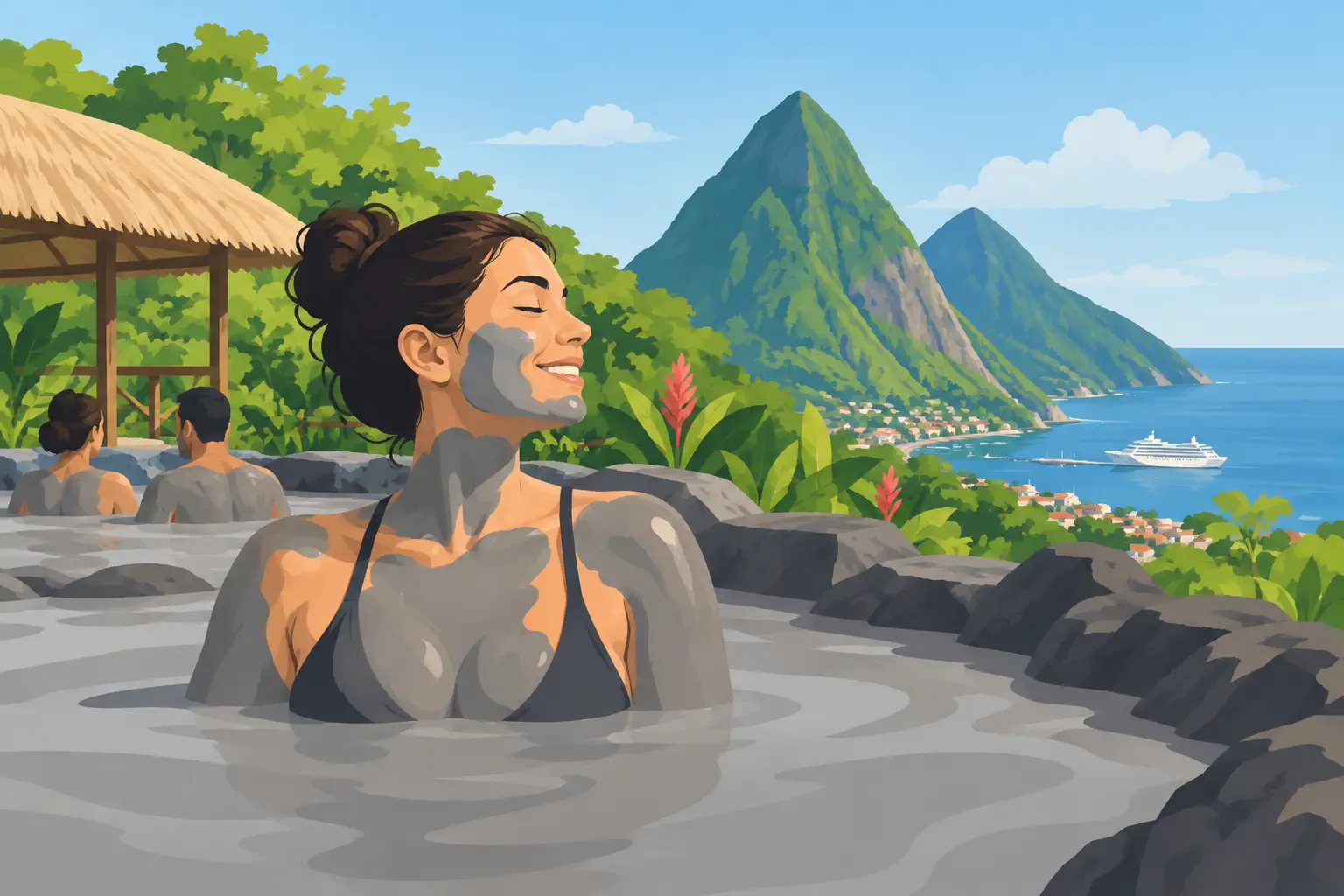
For cruise guests, timing matters most. A plantation visit works especially well as one stop on a private or semi-private tour that includes a viewpoint of the Twin Pitons, a drive through scenic communities, and perhaps a beach stop or the Sulphur Springs mud baths. The right combination depends on your ship’s hours in port, your group’s pace, and how much time you want to spend in the car.
Vacationers staying on the island have more flexibility. You might pair the plantation with a full Soufrière day, then take your time at Toraille Waterfall, a local restaurant, a beach, or a boat ride back along the coast. If you are based in the north and only have a few hours, ask for a route that includes a scenic drive and a plantation stop without trying to squeeze every major landmark into one day.
There is a trade-off. Saint Lucia is beautiful because it is mountainous, and the roads to many southern attractions are winding. A packed itinerary may check off more landmarks, but it can feel rushed and is not ideal for travelers who get carsick or prefer a slower pace. A private tour is often the easiest option for families, couples, and groups who want the freedom to spend longer at the stops they enjoy most.
What to Wear and Bring
Plantation ground can be uneven, damp, or muddy after rain, so comfortable walking shoes or secure sandals are a smart choice. Light clothing works well in the tropical heat, while a hat, sunscreen, and insect repellent can make the day more comfortable. Bring water, especially if your tour continues with walking, swimming, or a mud bath stop.
Keep expectations practical. This is an agricultural setting, not a polished botanical garden. You may encounter mud, insects, farm workers, and changing weather. That is part of what makes the visit feel authentic. If you would rather focus on views and local history than walk through a field, let your guide know. Often, a roadside or scenic plantation stop still gives you a great introduction with less walking.
Photography is usually welcome, but always follow your guide’s direction and respect active work areas. Avoid touching fruit, plants, equipment, or protective bags unless you are invited to do so. Farms are workplaces, and a little courtesy goes a long way.
Questions Guests Often Ask
Will I get to taste bananas at the plantation?
It depends on the location, season, and what is available that day. Some visits may include a chance to sample local fruit or see bananas being prepared, while others focus on viewing the growing areas and learning about cultivation. It is better to think of tasting as a possible bonus rather than a guarantee.
Is a banana plantation tour good for children?
Yes, especially for families looking for a break from sitting in the vehicle. Children often enjoy seeing how the bunches grow and learning that bananas do not grow on trees. Keep in mind that the terrain may be muddy or uneven, so younger children should stay close to adults.
How long does the stop take?
A plantation stop is commonly around 15 to 30 minutes, though timing varies by tour route and group interest. That makes it easy to include alongside other Saint Lucia highlights without turning the day into a long farm visit.
Can cruise passengers do this and return to the ship on time?
Yes, when the itinerary is built around your ship’s schedule and pickup time. Tell your tour operator your ship name, arrival time, and all-aboard time before booking. Harris Excursions plans cruise-friendly island days with punctual port pickup and return timing in mind, so you can enjoy the countryside without watching the clock at every stop.
Make the Stop Part of the Story
The best plantation tour is not about collecting another attraction for your vacation list. It is about understanding the island between the beach and the mountains: the land that feeds communities, the work behind a familiar fruit, and the local roads that lead to Saint Lucia’s biggest views.
Leave room in your day for that small surprise. A few minutes among the banana plants can make the rest of the island look different – greener, more lived-in, and far more connected to the people who call it home.



Leave A Comment